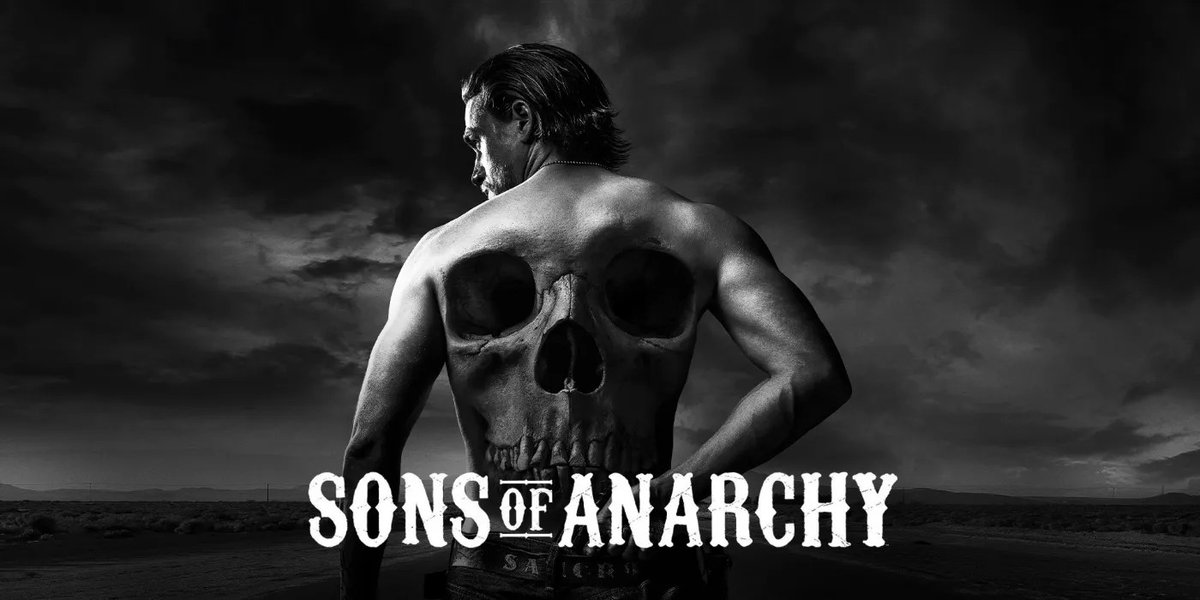
The roar of a motorcycle engine, the glint of chrome, and the shadow of a crow against the setting Charming sun. For seven seasons, Sons of Anarchy immersed us in a world of brotherhood, betrayal, and bloody consequences. But it was the final ride, Major Plotlines & Themes of SOA Season 7, that truly cemented its legacy, delivering a gut-wrenching tale of vengeance, fractured loyalties, and the ultimate, heartbreaking sacrifice.
If you’ve ever wondered how the saga of Jax Teller and SAMCRO truly came to its violent, inevitable close, you’re in the right place. We're about to dissect the harrowing journey that defined the outlaw club's final chapter, exploring the moral compromises, the strategic maneuvers, and the devastating personal costs.
At a Glance: SOA Season 7's Defining Moments
- Vengeance Takes the Wheel: Jax Teller's singular, all-consuming quest for retribution following Tara's brutal murder.
- A Club Transformed: SAMCRO's shift from a brotherhood upholding a code to an instrument of Jax's revenge, leading to radical changes.
- The Web of Lies: Gemma and Juice's desperate attempts to cover up the truth, fueling internal conflict and external chaos.
- Shifting Alliances & Brutal Retribution: SAMCRO's strategic partnerships, betrayals, and violent clashes across Northern California.
- The Truth's Unveiling: Jax’s discovery of who truly killed Tara, leading to an irreversible chain of events.
- Fulfilling a Legacy: Jax's ultimate decision to ensure the club's future and honor his father's original vision, albeit through a path of destruction.
- Critical Acclaim: The season received praise for its strong character arcs and relentless action, even as it delivered a dark conclusion.
The Weight of Vengeance: Jax's Descent into Darkness
Season 7 of Sons of Anarchy doesn't ease you in; it plunges you directly into the abyss of grief and rage. The catalyst is undeniable: the brutal murder of Tara Knowles-Teller, Jax's wife and the mother of his children, at the hands of his own mother, Gemma. From the moment the season opens, we see a Jax Teller stripped bare—not just of his love, but of his innocence, his hope, and any lingering faith in a peaceful future for his family.
His internal struggle is palpable. There's a raw, visceral pain that fuels every decision, every glance, every cold-blooded act that follows. Jax's initial reaction, turning himself into authorities, isn't a plea for justice in the traditional sense. It's a calculated move, a necessary chess piece in a larger, deadlier game he's orchestrating from behind bars. While in jail, he isn't just serving time; he's mapping out a radical new direction for the Sons of Anarchy Motorcycle Club, Redwood Original (SAMCRO). His singular goal? To find the perpetrator of Tara’s death and exact a vengeance so profound it will either obliterate SAMCRO or forge it anew in blood.
This commitment to revenge transforms SAMCRO from a club grappling with its identity into a sharp, focused instrument of Jax's will. The rules shift. The moral lines blur. What was once about brotherhood and territory now becomes a brutal, relentless hunt, turning Charming, California, into a battleground for Jax’s grief-fueled crusade. The consequences ripple outward, affecting every member, every alliance, and every enemy that crosses their path. This isn't just a plotline; it's a character study in how profound loss can twist a man, even one who once sought to steer his club away from violence, into its most destructive embodiment.
Forging Alliances, Shifting Sands: SAMCRO's Strategic Maneuvers
With Jax's vengeance now a club priority, SAMCRO couldn't operate in a vacuum. The search for Tara's "killer"—or rather, the scapegoat Jax was initially led to believe was responsible—demanded a broader reach. This meant soliciting help from other charters, strengthening the bonds of the Sons of Anarchy family, but also drawing them into the fray of Charming’s increasingly volatile landscape. These alliances weren't always clean; they were often transactional, built on shared enemies or mutually beneficial criminal enterprises.
The initial target of Jax's wrath, based on Gemma's deceitful framing, was the Lin Triad. This sparked a brutal gang war that escalated quickly, engulfing everyone from the Mayans and the One-Niners to the powerful Irish Kings. Jax meticulously, often ruthlessly, secures important alliances, playing various factions against each other. His strategic mind, honed by years of club politics, is now sharper than ever, but devoid of the moral compass that once guided him.
The violence at the Stockton Ports becomes a focal point for this escalating conflict, a grim battlefield where various crews clash, and Jax settles scores, often using shifting alliances as leverage. You see the club navigating a treacherous path, sometimes partnering with former rivals, only to betray them when it serves Jax's ultimate, unyielding purpose. An "unlikely partnership" is forged with the Grim Bastards MC, led by T.O. Cross, to undermine a powerful enemy, demonstrating Jax's willingness to cross traditional gang lines when it benefits his brutal agenda. This complex dance of loyalty and betrayal keeps viewers on edge, highlighting the fluidity of power in the outlaw world.
The Web of Deceit: Gemma, Juice, and the Internal Rat
At the heart of Season 7’s central conflict, simmering beneath Jax’s external war, is the agonizing truth hidden by Gemma Teller-Morrow and Juan Carlos "Juice" Ortiz. Gemma, consumed by guilt and fear after killing Tara, weaves a tapestry of lies, implicating the Lin Triad and setting Jax on his destructive path. Juice, caught in the crosshairs and terrified of Jax's wrath and exposure, becomes her unwilling accomplice, a desperate man on the run whose loyalty to Gemma is fueled by self-preservation and a profound sense of isolation.
Their story is a tragic counterpoint to Jax's righteous fury. As Jax systematically dismantles his enemies, unknowingly drawing closer to the real truth, Gemma and Juice become increasingly entangled in their own deceit. Their desperate flight, moving from safe house to safe house, relying on the kindness (or fear) of others, creates an unbearable tension. Every close call, every nervous glance, every whispered confession underscores the ticking time bomb of their secret.
This internal dynamic forces SAMCRO to deal with unprecedented heartache and conflict. Jax believes a rat is operating within the organization, leaking information, further clouding his judgment and escalating the violence. This focus shifts to flushing out an "internal rat," a quest that ironically brings Jax closer to discovering the truth about Gemma and Juice, creating a sense of dramatic irony that is both compelling and tragic. The club, already reeling from losses and internal strife, finds its bonds tested to the breaking point by these insidious lies, threatening to tear it apart from the inside.
Unmasking the Truth: Jax's Devastating Revelation
The truth, as it always does in Sons of Anarchy, eventually finds its way to the surface. For Jax, this revelation is not a moment of clarity but a catastrophic implosion of his entire world. The specific details of how Jax learns the truth about Gemma’s role in Tara’s death are carefully orchestrated, a slow unraveling that delivers maximum emotional impact. It's a gut punch, not just for Jax, but for the audience who has witnessed his relentless, misguided path of destruction.
This discovery doesn’t just reframe the entire season’s events; it redefines Jax’s understanding of his family, his club, and his own moral compass. The fury that fueled his revenge now turns inward, compounded by the devastating realization that he has waged war, sacrificed lives, and abandoned his own principles for a lie perpetrated by his mother. The emotional fallout is immense. Jax isn't just mourning Tara again; he's grappling with a betrayal of cosmic proportions, one that shatters the foundational myths of his life.
This pivotal moment is the turning point for the entire series. It dictates Jax's ultimate decision, forcing him to confront the consequences of his actions and the deep-seated corruption within his own family. The path forward is clear, though agonizing: he must settle the score, not just for Tara, but for the twisted legacy he inherited. The confrontation with Gemma, an inevitability steeped in Greek tragedy, is one of the most powerful and heartbreaking scenes in the show’s history, marking the end of one era and the painful beginning of another. For a deeper dive into the specific events leading up to this point and what happens next, you can explore the Sons of Anarchy Series 7 details.
The Weight of the Crown: SAMCRO's Evolution and Reckoning
Under Jax's leadership in Season 7, SAMCRO undergoes a profound and irreversible transformation. No longer just an outlaw motorcycle club, it becomes the instrument of one man's grief and rage, an army committed to a vendetta that transcends traditional club business. This radical shift means that the club's "evolution" is less about growth and more about a tragic unraveling, a necessary destruction to clear the path for a new beginning—or an end.
The club deals with internal heartache and conflict on an unprecedented scale. Members question Jax's increasingly reckless decisions, the ever-mounting body count, and the blurring lines between justified revenge and senseless violence. Old loyalties are tested, new ones are forged in fire, and the very definition of brotherhood is stretched to its breaking point. Characters like Chibs, Tig, and Bobby (until his tragic end) grapple with their roles, torn between their unwavering loyalty to Jax and their growing discomfort with the path he's chosen.
Beyond the internal turmoil, SAMCRO is also locked in conflict with the organization at large. Jax's actions don't just affect Charming; they send shockwaves through the entire Sons of Anarchy national charter. The need for a President to answer for the club's chaotic and violent behavior becomes a looming threat. The club's very existence, its place within the broader network of charters, hangs in the balance as Jax pursues his final, self-destructive mission. This external pressure, combined with the internal fracturing, creates an atmosphere of constant peril, where every choice has dire, irreversible consequences.
The Ultimate Sacrifice: Fulfilling a Father's Legacy
Jax Teller's journey in Sons of Anarchy has always been framed by the shadow of his father, John Teller. John's manuscript, detailing his vision for SAMCRO and his fears about the club's violent trajectory, served as Jax's initial motivation to steer the Sons toward a more legitimate future. However, Season 7 sees Jax taking a darker, more destructive path to ultimately arrive at a form of his father's legacy—one that requires ultimate personal sacrifice.
After learning the truth and executing his mother, Jax understands the full, crushing weight of his inherited curse. His final decision is not one of surrender, but of calculated sacrifice. He must complete his part of SAMCRO's story, not by escaping the violence, but by embracing it, becoming the ultimate martyr to cleanse the club of its sins and break the cycle of violence for his sons, Abel and Thomas. He ensures their safety and future, separating them from the club’s bloody grip, much like John Teller had wished for his own family.
The ending is a poignant, tragic, and oddly redemptive one. Jax's final ride on his father’s custom Harley, mirrored by the image of the crow (a constant symbol throughout the series), is a powerful visual metaphor. He embraces his fate, fulfilling his destiny as a sacrificial lamb, bringing closure not just to his own story but to the entire saga of SAMCRO. It’s a devastating end that is also a new beginning, ensuring that while the Sons may ride on, the Teller curse—at least for Abel and Thomas—is finally broken. His death is not just an ending; it’s a necessary, violent cleansing, a final act of love and loyalty to his sons, his club, and his father's memory.
Behind the Leather: Production Notes & Critical Reception
Crafting a season as intense and conclusive as Season 7 required a dedicated effort from the cast and crew. Filming primarily took place at Occidental Studios Stage 5A in North Hollywood, giving the team a controlled environment, while external scenes in Sun Valley and Tujunga brought the gritty reality of Charming to life. This blend of studio work and location shooting allowed Kurt Sutter and his team to maintain the show's signature aesthetic, blending raw realism with dramatic flair.
The final season saw some notable changes in the cast lineup, reflecting the evolving narrative and the ultimate fates of several characters. While stalwarts like Ron Perlman (Clay Morrow) and Maggie Siff (Tara Knowles-Teller) did not return due to their characters' demise in previous seasons, their absence was keenly felt, underscoring the finality of the show. Drea de Matteo (Wendy Case), David LaBrava (Happy Lowman), and Niko Nicotera (George "G.I." Juice Ortiz) were deservedly promoted to the regular cast, their characters playing increasingly central roles in the season’s unfolding drama.
A host of familiar faces returned in recurring guest roles, including Robert Patrick (Les Packer), Emilio Rivera (Marcus Alvarez), Billy Brown (August Marks), CCH Pounder (Tyne Patterson), Peter Weller (Charles Barosky), and Kim Dickens (Colette Jane), each adding layers to the complex world of Charming. The season also featured some intriguing guest stars, such as musician Marilyn Manson, Malcolm-Jamal Warner, Lea Michele (in the sixth episode), and Charisma Carpenter, proving the show’s enduring draw for diverse talent.
Upon its conclusion, Sons of Anarchy Season 7 was met with generally favorable reviews from critics. Metacritic, which assigns a weighted average score, reported a 68% score from 6 critics, indicating "generally favorable reviews." Rotten Tomatoes offered an even stronger endorsement, with an 83% approval rating based on 186 reviews. The critical consensus praised the season for its "grounded characters and clearly defined storylines, without losing any of the show's bone-chilling action." This feedback highlighted the season's ability to deliver a coherent, character-driven narrative while maintaining the high-octane, violent spectacle that fans had come to expect. The season's DVD and Blu-ray release in the United States on February 24, 2015, allowed fans to revisit Jax's final ride and dissect every intricate detail of SAMCRO's dramatic conclusion.
Reflecting on the Ride: Why Season 7 Resonates
Sons of Anarchy Season 7 wasn't just another chapter; it was the definitive statement, a harrowing and emotionally charged culmination of everything the series had built. It dared to confront the deepest themes of loyalty, betrayal, and the cyclical nature of violence, all through the lens of a man utterly consumed by grief. Jax Teller's journey wasn't pretty, it wasn't easy, but it was undeniably compelling, forcing us to witness the dark consequences of choices made in the crucible of love and loss.
The season’s power lies in its unflinching portrayal of human frailty, the corrupting influence of power, and the desperate lengths to which people will go to protect their own, even when that protection means self-destruction. It leaves you with a lingering sense of melancholy, a profound understanding of the sacrifices made and the legacies forged in blood.
If you’ve experienced this ride before, perhaps it’s time to revisit it, to appreciate the intricate plotting and the raw emotional performances that made it so impactful. If you’re new to the world of SAMCRO, understanding these major plotlines and themes of SOA Season 7 provides a crucial lens through which to appreciate the show's lasting impact on television and its complex exploration of the American outlaw myth. What Jax did, how he did it, and why he chose his ultimate path isn't just entertainment; it's a brutal, beautiful, and unforgettable exploration of the human soul.